Choosing how to manufacture your coffee machines is the first real decision a new brand makes. The two dominant models — OEM and ODM — sound similar but hand you very different levels of control, cost, and speed.
What OEM really means
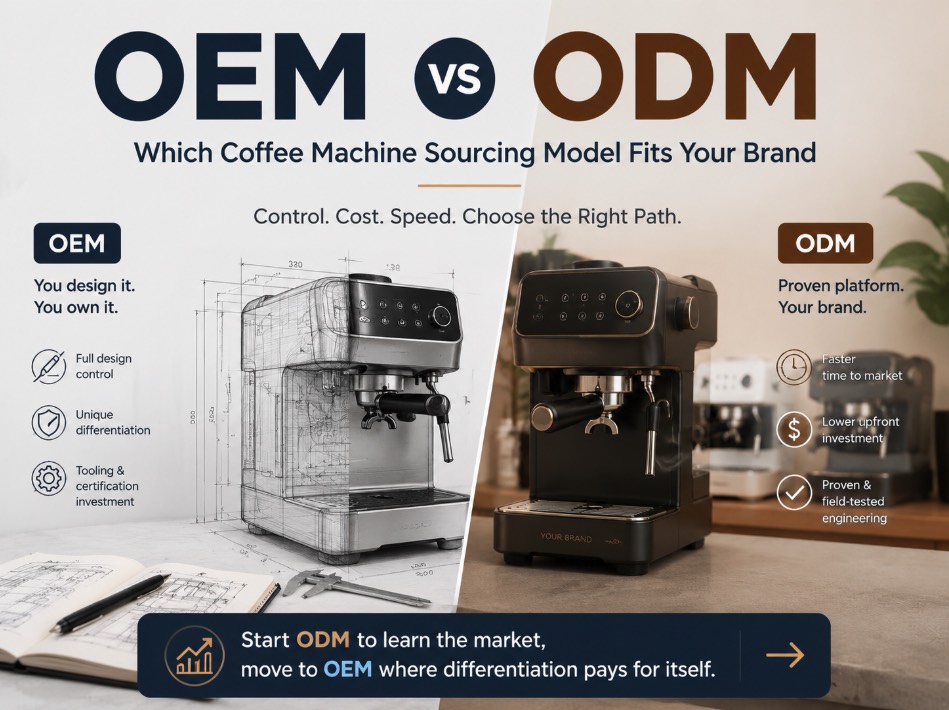
In an OEM (Original Equipment Manufacturer) arrangement, you bring the design and specification; the factory builds to your drawings. You own the product definition end to end.
When OEM is the right call
- You already have an industrial design and a bill of materials.
- You need a distinctive product that competitors can't simply re-order.
- You have the volume to amortize tooling and certification costs.
What ODM changes
With ODM (Original Design Manufacturer), the factory already has a proven platform. You customize the housing, finish, branding, and a handful of parameters — but the core engineering is theirs.
Why brands start with ODM
- Speed — a reference platform can ship in weeks, not quarters.
- Lower upfront cost — no ground-up tooling.
- De-risked engineering — the boiler, pump, and control board are field-proven.
How to decide
The honest answer is volume and differentiation. Early-stage brands almost always start with ODM to validate the market, then graduate selected SKUs to full OEM once demand justifies the tooling spend.
Start ODM to learn the market, move to OEM where differentiation pays for itself.
If you're still mapping your first order, talk to a sourcing partner who can run both models — it keeps your options open as you scale.